

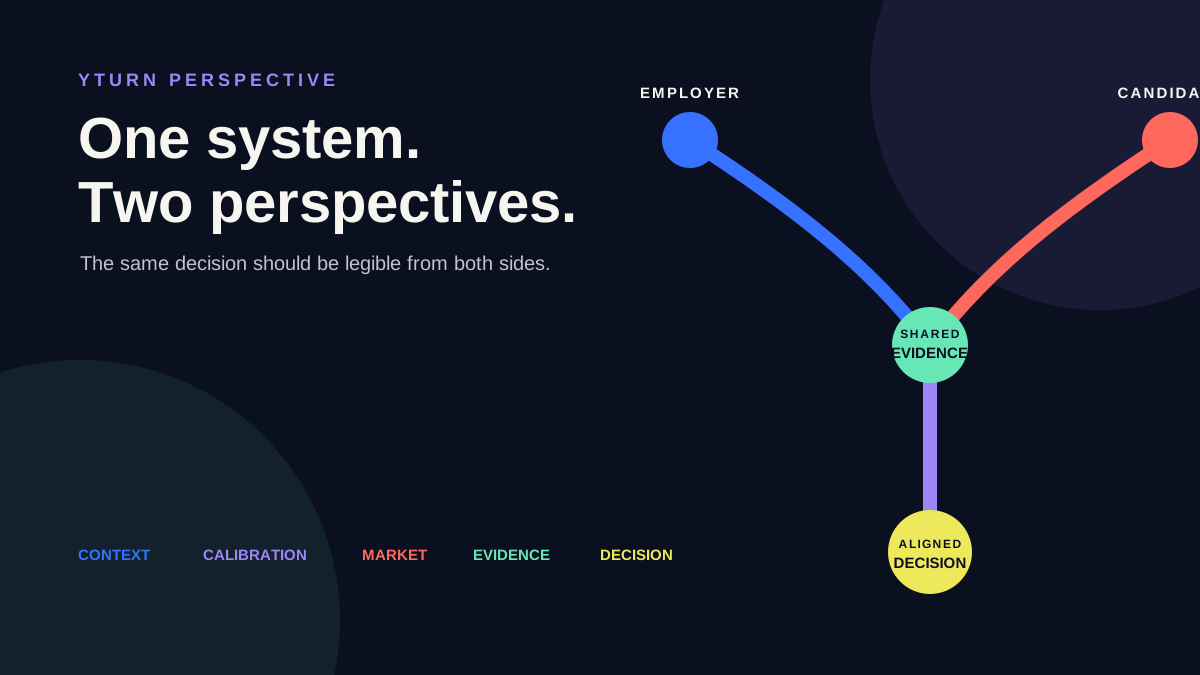
Hiring processes often ask employers and candidates to tell two different stories. The company describes a vacancy, the candidate describes a career, and the process tries to discover whether the two happen to match. YTURN takes a different view: the same decision should be legible from both sides. Context, Calibration, Market, Evidence and Decision create a shared language for testing the mandate, the opportunity and the trade-offs before an appointment is made.
Two sides can be accurate and still be misaligned
An employer can be completely accurate about the skills it wants and still have an unclear role. A candidate can be completely accurate about their experience and still be difficult to assess for that role. The problem is usually not a lack of information. It is that the information has been organised around different questions. One side talks about responsibilities, the other talks about achievements, and neither side has yet established which business outcomes actually connect them.
A shared decision system creates a common frame. It does not force employers and candidates to have the same priorities. It makes the differences visible early enough to discuss them. That matters in technology businesses where titles move quickly, operating models differ widely and the same experience can transfer well in one environment but poorly in another.
Context: start with what each side is trying to change
For the employer, Context means understanding why the appointment matters now. Is the company entering a market, replacing a leader, rebuilding a function, scaling a platform or creating a capability that does not yet exist? The answer changes the role before a job title is selected.
For the candidate, Context means understanding what they want to change in their next move. More ownership, a different market, stronger leadership responsibility, a more mature engineering environment or a chance to build from zero are materially different motivations. When both contexts are visible, the process can test whether the opportunity genuinely connects them rather than relying on title recognition.
Calibration: translate ambition into a mandate both sides can understand
Calibration turns the business context into ownership, outcomes, constraints and evidence of success. It also gives the candidate something concrete to react to. A role becomes easier to evaluate when the person can see what they would inherit, what decisions they would own and what the organisation expects to be different because they joined.
This is also where assumptions should be challenged. If a company wants a market builder but has designed a heavily inherited account role, or wants a strategic technology leader but expects most of the week to remain hands-on, the mismatch is better surfaced before the market is approached. Calibration is not extra process. It prevents the process from solving the wrong problem.
Market: let reality test both the brief and the opportunity
Market information should do more than generate a list of names. It should test whether the combination of scope, level, location, compensation and experience is realistic. If the market repeatedly responds differently from the brief, that is evidence about the brief.
The same market context matters to candidates. Understanding how the role sits in the organisation, what alternatives exist and which constraints are genuinely fixed makes the opportunity easier to judge. Transparency does not mean every commercial detail is public. It means important trade-offs are not hidden until the final stage.
Evidence: compare what happened, where it happened and why it matters
Evidence is strongest when experience is read in context. A revenue number, platform migration, team size or executive title can all look impressive while telling very little about the conditions in which the result was produced. What did the person inherit? What decisions did they make? What support existed? What changed because of their work?
For the employer, those questions create a more useful comparison between candidates. For the candidate, they create a fairer way to explain experience that may not carry an identical title or company brand. The goal is not to remove judgement from hiring. It is to give judgement better material.
Decision: make the trade-offs visible enough for both sides to choose
The final decision is rarely about perfect fit. Strong appointments usually involve trade-offs: more market-building experience but less scale, deeper technical depth but a new industry, stronger leadership experience but a different sales motion. A shared framework helps the employer decide which trade-offs matter and helps the candidate decide whether the environment is one in which they want to operate.
That is the point of one system with two perspectives. YTURN is not trying to make the employer and candidate see the opportunity identically. The aim is to make sure they are making the decision from the same underlying reality. When Context, Calibration, Market and Evidence are aligned, Decision becomes less about hope and more about informed confidence.
Five questions to keep aligned
Context: what is the business trying to change, and what is the candidate trying to change? Calibration: what will the person actually own, and does that mandate match the direction they want? Market: which parts of the brief are realistic, and which constraints materially affect the opportunity? Evidence: what has the candidate actually demonstrated in comparable conditions? Decision: which trade-offs are both sides knowingly accepting?
These questions are intentionally simple. Their value comes from using them consistently rather than adding more stages. When the answers become clearer as a process progresses, the hiring system is doing useful work. When the answers become less consistent, that is a signal to recalibrate before urgency turns ambiguity into an appointment.